






















Crypto Chronicle: The Week Crypto’s Future Got Political, Regulated, and Tokenized
Crypto didn’t just make headlines this week—it redrew the global map.
Across Washington, Astana, and Wall Street, three powerful forces collided: regulation, institutional adoption, and blockchain infrastructure. Together, they revealed a simple truth the industry can no longer ignore—crypto’s experimental era is ending, and the age of rules, rails, and real-world scale has begun.
🇺🇸 Washington Wavers as Crypto Regulation Nears Its Breaking Point
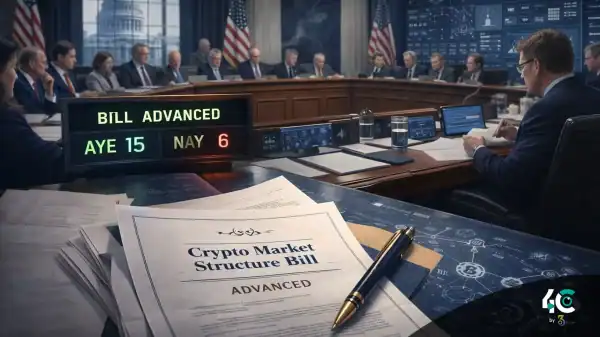
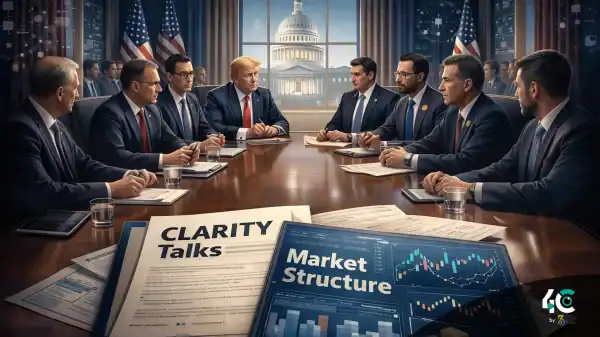
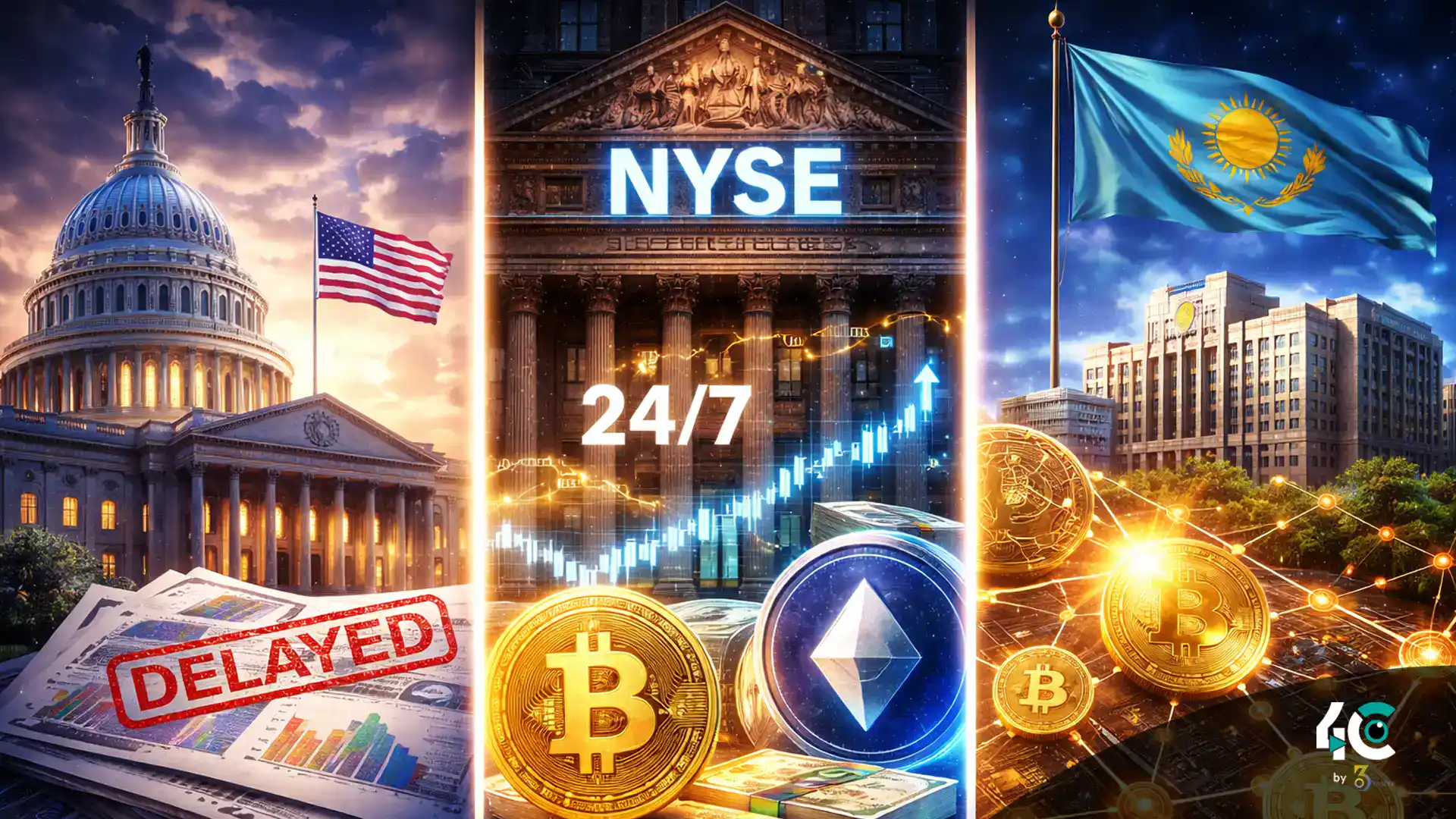
In the US, anticipation turned into anxiety as the Senate Agriculture Committee delayed its long-awaited digital asset market structure bill. Designed to align with the House’s CLARITY Act, the legislation was meant to finally define who regulates what in America’s sprawling crypto economy.
But momentum cracked when Coinbase stepped back, with CEO Brian Armstrong raising red flags over DeFi restrictions, stablecoin reward language, and unresolved conflicts of interest. Behind closed doors, Senate Democrats are reportedly pushing for tougher DeFi oversight—threatening to slow negotiations even further.
Still, the message from the White House is unmistakable: regulation is inevitable. Crypto adviser Patrick Witt called it “pure folly” to believe a multi-trillion-dollar industry will remain unregulated. Even Donald Trump, speaking at Davos, claimed he plans to sign a crypto market structure bill “very soon.”
The clock is ticking. With the 2026 US midterm elections looming, lawmakers face a narrowing window to act. Miss it, and America risks falling behind just as other nations sprint ahead.
Read Full Article: The US Senate Crypto-Market Structure Bill Is Delayed Over Coinbase
🇰🇿 Kazakhstan Makes Its Move: Crypto, But on State Terms
While the US debates, Kazakhstan executed.
President Kassym-Jomart Tokayev signed a sweeping new law that places the country’s entire digital asset ecosystem under a clear, centralized framework. Cryptocurrency exchanges will now require licenses, approved assets will be whitelisted, and the National Bank of Kazakhstan takes center stage as chief regulator.
The law introduces a new asset class—Digital Financial Assets (DFAs)—covering stablecoins, asset-backed tokens, and fully digital financial instruments. Bitcoin and Ether are officially classified as “unsecured digital assets,” with trading limits designed to protect retail investors.
This isn’t a crackdown—it’s a calculated bet. Kazakhstan wants innovation, but only within clearly defined legal rails. Having already embraced crypto mining, stablecoin payments, and Bitcoin ETFs, the country is positioning itself as Central Asia’s most serious digital asset hub.
In a world craving regulatory clarity, Kazakhstan just offered institutions something rare: certainty.
Read Full Article: Kazakhstan Passes New Crypto Law, Giving Central Bank Power Over Digital Assets
📈 Wall Street Goes Onchain as NYSE Bets on Tokenized Markets
Then came the shockwave from New York.
The New York Stock Exchange (NYSE), in partnership with Intercontinental Exchange, announced plans for a blockchain-powered platform to trade tokenized stocks and ETFs, complete with real-time settlement and stablecoin payments.
If approved, the platform could unlock 24/7 trading, fractional ownership, and near-instant settlement—obliterating the legacy T+1 system still used in US equity markets.
This isn’t theoretical. ICE is already working with banks like BNY Mellon and Citi on tokenized deposits, laying the groundwork for always-on liquidity. Nasdaq is racing toward extended hours too, signaling a high-stakes battle to modernize global markets.
For the world’s most iconic exchange, this move sends a loud signal: blockchain is no longer optional—it’s foundational.
Read Full Article: NYSE Bets on Blockchain Future With 24/7 Trading of Tokenized Stocks and ETFs
⚡ The Bigger Picture: Crypto’s Era of Consequences Begins
Taken together, this week tells a powerful story:
- The US is struggling to define the rules.
- Kazakhstan is enforcing them decisively.
- Wall Street is building the rails for a tokenized future.
Crypto is no longer asking for permission. Governments and institutions are racing to catch up, shape it, and—where possible—control it.
For investors, builders, and policymakers, one thing is clear:
The next winners won’t be those who resist regulation—but those who understand it first.
The Crypto Chronicle will be watching closely.