

























Bitcoin Mining Costs in Focus as US Eyes Venezuela’s Oil Wealth
A dramatic shift in global energy dynamics could soon ripple through the crypto industry.
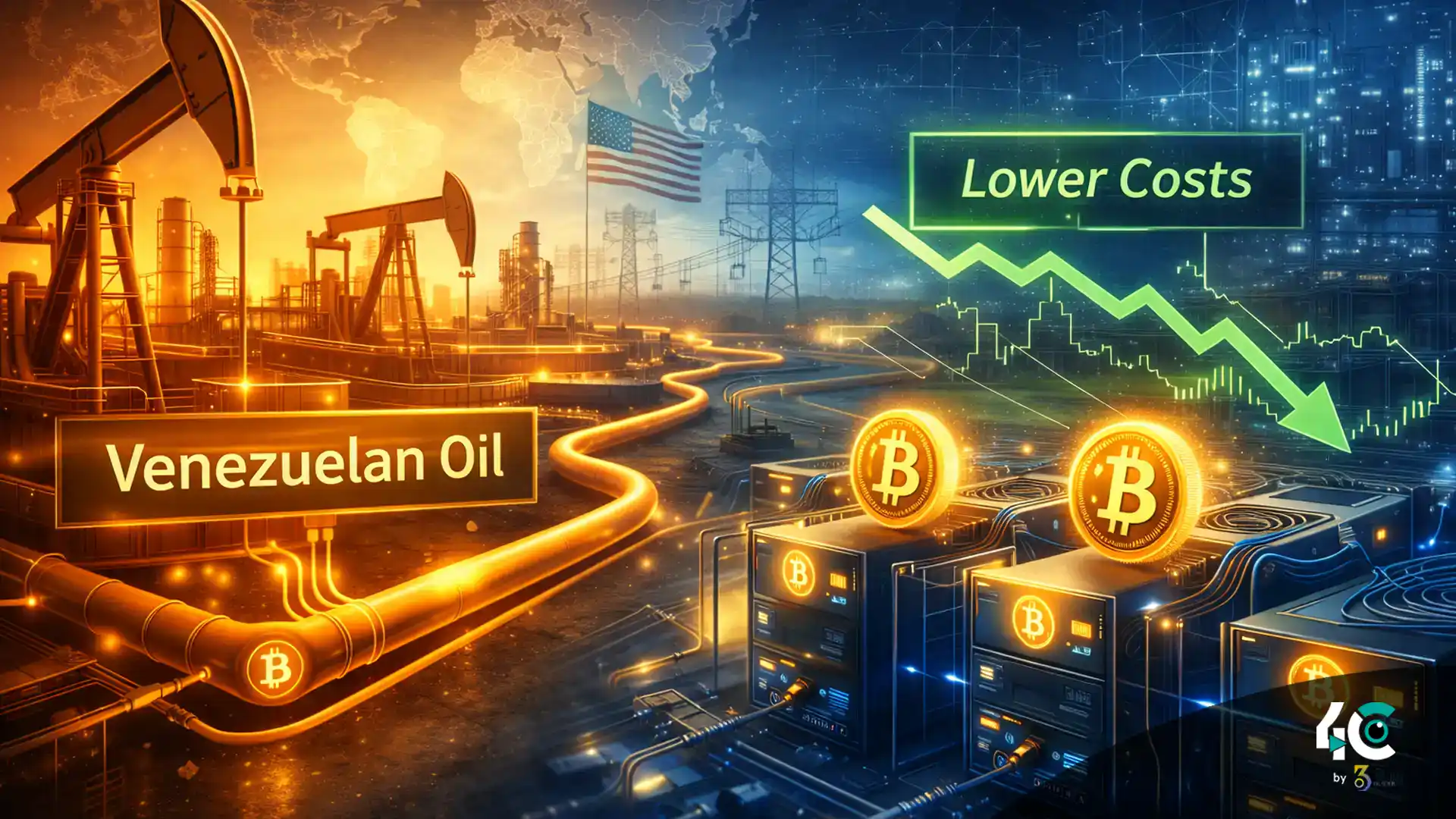
According to analysts at Bitfinex, US access to Venezuela’s massive oil reserves has the potential to lower Bitcoin mining costs, easing pressure on miners who have been struggling with higher electricity prices, rising mining difficulty, and a pullback in Bitcoin prices from record highs.
“Cheaper and more abundant energy would improve miner margins globally,” Bitfinex analysts said, noting that affordable power could spark a new phase of Bitcoin mining expansion, particularly in regions able to lock in long-term energy contracts.
How Venezuelan Oil Could Improve Bitcoin Mining Profitability
Energy Prices and Bitcoin Mining Economics Collide
The US has already begun seizing Venezuelan oil tankers, and following the reported capture of President Nicolás Maduro, is expected to push forward with plans to extract Venezuela’s estimated 303 billion barrels of crude oil—the largest proven reserves in the world.
At present, Chevron remains the only major US oil company operating in Venezuela, but President Donald Trump is urging other American energy giants to enter the country and ramp up production.
Bitfinex analysts believe even tapping a small fraction of Venezuela’s reserves could meaningfully impact global energy prices, delivering relief to energy-intensive industries like Bitcoin mining.
For miners, that relief couldn’t come sooner. Bitcoin has fallen roughly 25% from its all-time high, while electricity costs and network competition continue to eat into margins.
Also Read : South Korea’s BC Card Completes Stablecoin Payments Pilot
Short-Term Relief, Long-Term Transformation
Why Lower Bitcoin Mining Costs Won’t Happen Overnight
Despite the optimism, analysts caution that Venezuela’s oil revival will take time.
“Any meaningful increase in Venezuelan output would take years, not months,” Bitfinex said, pointing to political uncertainty and lingering sanctions as key variables.
Matt Mena, crypto research strategist at 21Shares, echoed that view, estimating that it could take a decade and more than $100 billion in infrastructure investment to restore Venezuela to its former status as a global oil powerhouse.
From Oil Giant to Economic Collapse
Venezuela’s Long Decline Explains the Challenge Ahead
In the 1970s, Venezuela produced roughly 3.5 million barrels per day, accounting for about 7% of global oil output. Today, production has collapsed to around 1 million barrels per day, just 1% of global supply.
The decline unfolded under decades of political mismanagement, with the Venezuelan bolívar losing 99.99% of its purchasing power since 2013. Economic breakdown, human rights abuses, and restricted political freedoms have further eroded the country’s energy infrastructure.
Oil Prices Dip, Bitcoin Miners Get Breathing Room
Immediate Effects on Energy Markets and Crypto
Following US intervention, crude oil prices slipped, with the US benchmark falling to roughly $58 per barrel, down from December highs near $60.
While the drop is modest, it offers incremental relief for Bitcoin miners, especially those whose electricity pricing remains tied to fossil fuel markets.
However, Bitfinex analysts caution that the broader crypto market is unlikely to be driven by energy fundamentals alone.
“Crypto prices are likely to be influenced more by macro risk appetite, volatility, and cross-asset positioning,” they said.
The Bigger Picture for Bitcoin Mining
If Venezuela’s oil resources are eventually brought online at scale, the implications could be profound:
- Lower Bitcoin mining costs
- Wider geographic distribution of hash power
- Renewed infrastructure investment
These changes could reshape the Bitcoin mining industry over the next decade.
For now, miners are watching closely—because in crypto, cheaper energy doesn’t just mean higher profits. It can change who survives, who expands, and who leads the next era of Bitcoin mining.