


















Washington Raises Alarm Over SEC Crypto Enforcement Retreat
Growing concern is mounting in Washington, D.C. over the future of SEC crypto enforcement, as three Democratic members of the U.S. House of Representatives formally questioned the agency’s leadership over its decision to drop or pause more than a dozen cryptocurrency-related cases.
In a sharply worded letter sent Thursday to SEC Chair Paul Atkins, Representatives Maxine Waters, Brad Sherman, and Sean Casten challenged what they described as a troubling pullback in enforcement against major crypto players—raising red flags about transparency, accountability, and political influence.
SEC Crypto Enforcement Under Fire From House Democrats
The lawmakers pointed to the SEC’s recent dismissal or suspension of cases involving high-profile firms such as Binance, Coinbase, and Kraken, arguing that the agency appears to have abandoned much of its earlier enforcement agenda.
They questioned whether the SEC is still fulfilling its core mission of protecting investors, warning that the sudden retreat from enforcement could weaken confidence in U.S. financial markets.
According to the letter, the SEC has “openly and boldly dismissed” the majority of its crypto cases, prompting lawmakers to demand clarity on how and why these decisions were made.
Also Read : US Lawmakers Target Prediction Markets After Explosive Maduro Bet Sparks Insider Trading Fears
Justin Sun Case Sparks ‘Pay-to-Play’ Concerns
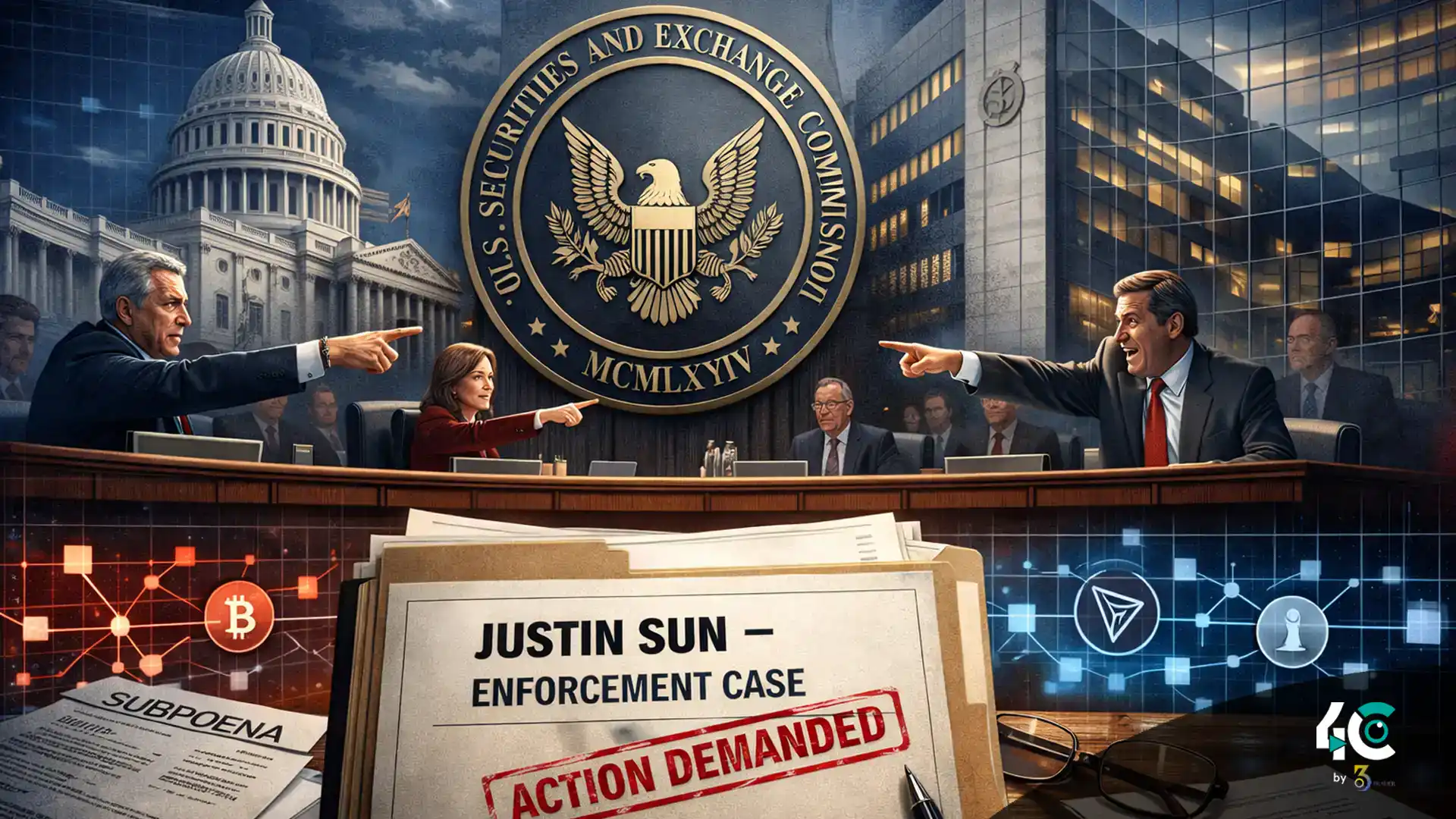
While the letter addressed multiple cases, its sharpest focus was on the SEC’s paused enforcement action against Justin Sun, the founder of Tron.
Earlier this year, the SEC asked a federal court to halt proceedings against Sun, citing the possibility of reaching a resolution. That pause has now stretched close to a year—an outcome lawmakers say sends the wrong message to markets.
Waters, Sherman, and Casten raised concerns about Sun’s alleged ties to China and suggested the stalled case could reflect a “pay-to-play” dynamic, pointing to Sun’s reported purchases of millions of dollars’ worth of tokens from World Liberty Financial, a crypto venture linked to President Donald Trump and his sons.
They warned that shelving the case risks creating the perception that politically connected figures can sidestep U.S. securities laws.
Lawmakers Warn of Eroding Trust in SEC Crypto Enforcement
In their letter, the representatives cautioned that weakening SEC crypto enforcement could have far-reaching consequences for the U.S. economy.
“Without a strong, independent SEC, capital formation will undoubtedly suffer,” the lawmakers wrote, adding that prolonged delays in the Sun case signal selective enforcement and undermine the rule of law.
They formally requested that the SEC preserve and hand over all internal documents and communications related to its decision-making in the Sun matter.
Neither the SEC nor representatives for Sun responded to requests for comment at the time of publication.
Political Pressure Grows as SEC Loses Democratic Representation
The controversy comes amid a broader shift at the SEC itself. With the recent departure of Caroline Crenshaw, the agency now consists entirely of Republican Party (United States) commissioners, leaving two seats vacant and no announced plans to restore bipartisan balance.
Representative Waters has already called for congressional hearings into what she described as the SEC’s “rapid, significant, and questionable policy shifts” under the Trump administration—particularly regarding crypto enforcement.
Similar concerns are emerging at the Commodity Futures Trading Commission (CFTC), which is also operating with a single Republican commissioner, far below its usual five-member leadership structure.
Why This Moment Matters
As crypto markets mature and institutional adoption accelerates, consistency and credibility in SEC crypto enforcement are more critical than ever. Lawmakers warn that abrupt reversals and stalled cases risk damaging investor confidence at a time when regulatory clarity is urgently needed.
Whether the SEC responds with transparency—or continues down its current path—could shape the future of U.S. crypto regulation and determine how seriously the markets take securities law enforcement in the digital asset era.