























Tether CEO Slams S&P Rating, Claims Downgrade Ignores Billions in Assets
Tether is once again at the center of a global debate — and this time, its CEO Paolo Ardoino is pushing back hard.
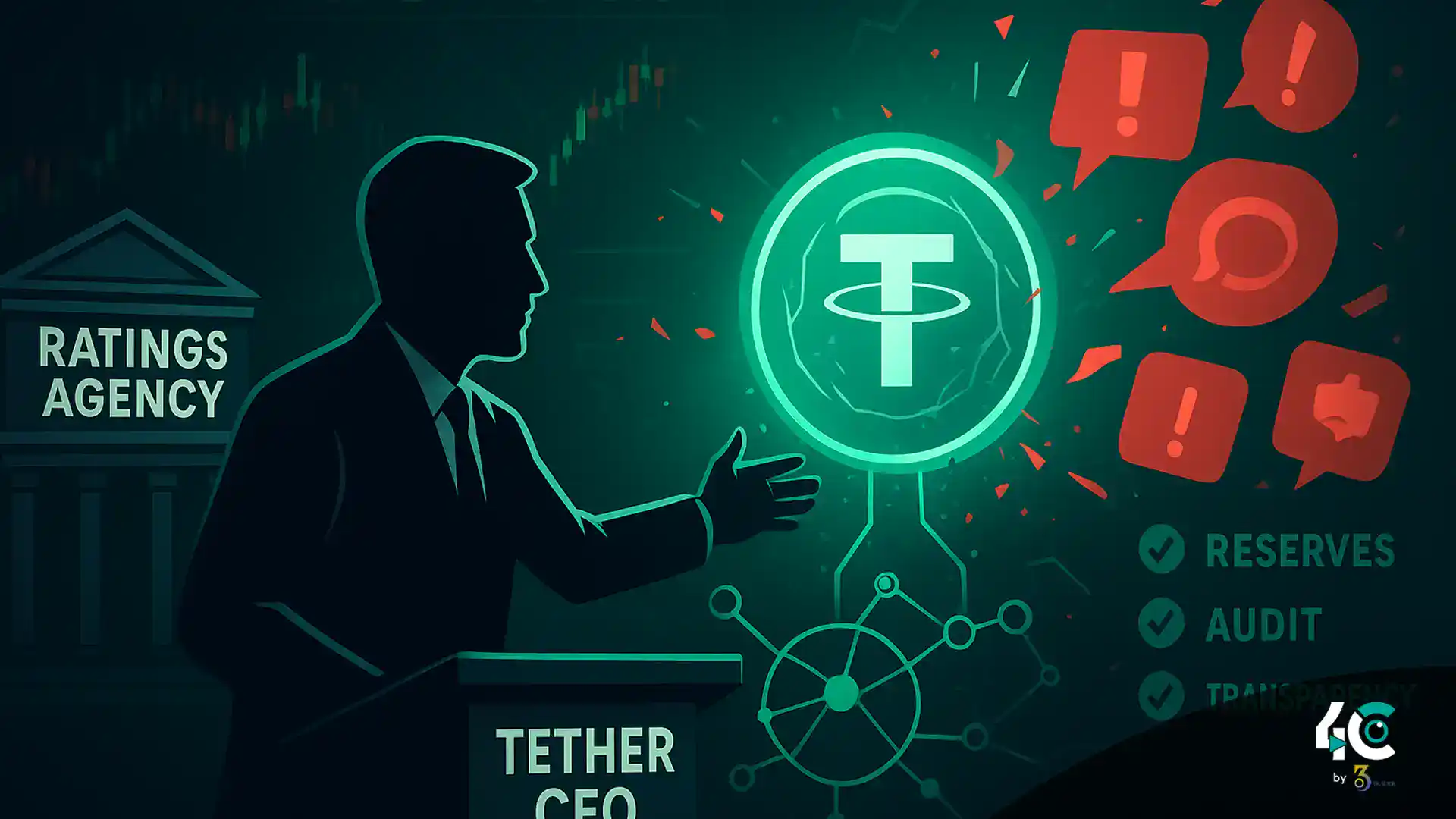
In a strongly worded rebuttal, the Tether CEO slammed the S&P rating that downgraded USD₮’s dollar-peg strength to “weak,” saying the agency overlooked critical parts of Tether’s balance sheet and revenue model.
According to Ardoino, the Tether Group closed Q3 2025 with $215 billion in total assets against $184.5 billion in liabilities, leaving the company with substantial excess reserves that S&P “simply did not account for.”
He added that Tether held:
- $7 billion in excess equity,
- $23 billion in retained earnings, and
- Nearly $500 million per month in profits from U.S. Treasury yields.
“S&P ignored additional Group equity and the half-billion in monthly base profits generated by Treasuries,” Ardoino said, calling the assessment fundamentally incomplete.
The downgrade triggered waves of FUD across the market, especially as USD₮ remains one of the most systemically important assets in crypto.
Also Read : ECB Warns of Explosive Stablecoin Risks That Could Shake Europe’s Economy
Analysts Clash Over Tether’s Balance Sheet After S&P Downgrade
Tether CEO Slams S&P Rating as Analysts Split on USDt Stability
The S&P downgrade opened a divide among analysts — some raising concerns, others dismissing the fears outright.
Crypto veteran Arthur Hayes argued that Tether may be accumulating BTC and gold to offset shrinking Treasury yields amid the Federal Reserve’s rate-cut cycle.
He warned that if both assets were to drop sharply:
“A 30% drawdown in their BTC and gold positions could wipe out equity and potentially make USDt insolvent.”
Hayes’ claim reignited discussion around Tether’s investment strategy and transparency.
But not everyone is convinced by the skepticism.
Former Citi lead digital asset analyst Joseph Ayoub outright rejected the bearish take, noting that Tether:
- Holds more assets than it publicly reports,
- Operates one of the most profitable business models in crypto,
- Generates billions in interest with a lean team of ~150 employees, and
- Is “better collateralized than many traditional banks.”
Ayoub said Hayes’ analysis “does not reflect the full picture” of Tether’s financial strength.
The Battle Over USDt’s Integrity Is Far From Over
The storm surrounding the Tether CEO slamming the S&P rating underscores a deeper tension:
Can the world’s largest stablecoin maintain long-term confidence as regulations tighten and market scrutiny grows?
For now, Tether’s leadership is adamant that USD₮ remains fully backed — and that S&P’s downgrade has more holes than the company’s reserves ever did.
But with global regulators watching and trillions in crypto liquidity relying on USD₮, the stakes couldn’t be higher.