























South Korea Crypto Account Freeze Proposal Signals a Tougher Regulatory Era
South Korea’s financial watchdogs are preparing a major shift in how crypto market abuse is policed.
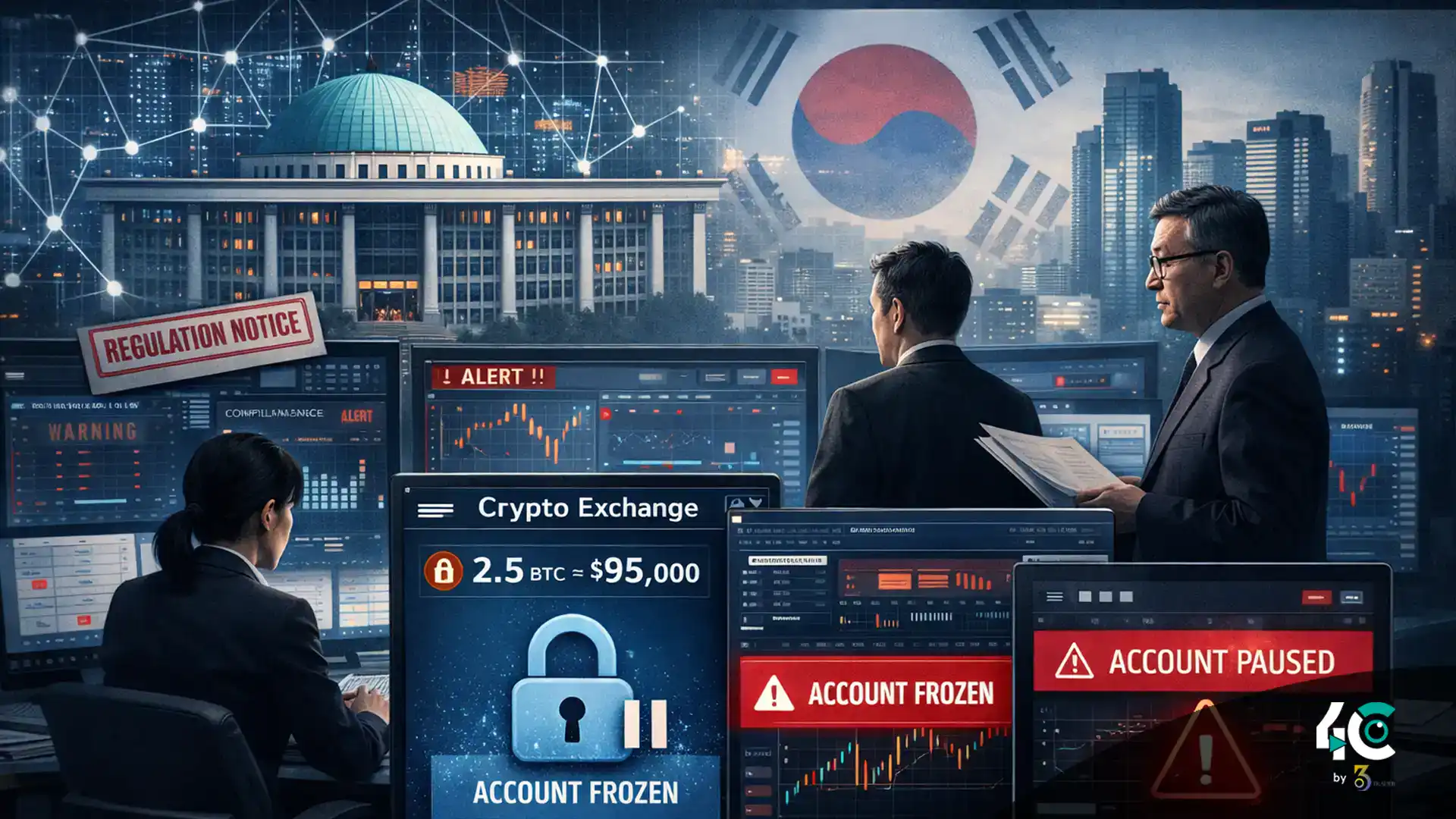
According to local reports, the Financial Services Commission (FSC) is reviewing whether regulators should be allowed to preemptively freeze crypto accounts suspected of price manipulation—before illicit gains are moved or laundered. If adopted, the proposal would mark one of the most aggressive enforcement tools yet applied to the country’s digital asset market.
The plan centers on a payment suspension system that would temporarily block transactions tied to suspicious trading activity, mirroring powers already used in South Korea’s stock market.
Why South Korea Wants Faster Crypto Account Freezes
Closing the Enforcement Gap in Crypto Markets
Under the current system, authorities must obtain court warrants to freeze crypto assets. Regulators say that delay often gives suspected manipulators enough time to move funds, convert profits, or hide assets in private wallets.
The FSC argues that crypto price manipulation moves too fast for traditional enforcement timelines. Tactics such as front-running, automated wash trading, and sudden high-volume buy orders can create large unrealized gains that vanish in minutes once traders exit their positions.
A South Korea crypto account freeze mechanism, applied early, could prevent those profits from ever being cashed out.
Also Read : El Salvador Continues Bitcoin Strategy Amid Sale of Chivo Wallet
Borrowing Stock Market Rules for Crypto Oversight
Extending Traditional Finance Tools to Digital Assets
South Korea already allows regulators to freeze brokerage accounts in cases of suspected stock manipulation or illegal short selling. Amendments to the Capital Markets Act that took effect in April 2025 strengthened those powers.
According to reports, the FSC discussed extending similar account-freezing authority to crypto markets during a closed-door meeting in November, while reviewing the country’s first crypto price manipulation case under updated enforcement rules.
Regulators have emphasized that crypto assets require even stronger safeguards than equities, given how easily they can be transferred across borders or into self-custodied wallets.
South Korea’s Broader Crypto Regulatory Tightening
From User Protection to Active Market Intervention
The proposed crypto account freeze powers fit into a wider regulatory shift underway in South Korea.
- Tax enforcement: In October, the National Tax Service (South Korea) warned that crypto stored in cold wallets is not beyond government reach, citing its authority to seize offline storage devices in tax evasion cases.
- Exchange liability: In December, the FSC explored holding crypto exchanges financially responsible for user losses caused by hacks or system failures—even without proven negligence.
- Next-phase legislation: While South Korea’s first phase of crypto laws focused on investor protection, the second phase is expected to introduce stricter rules on stablecoins and market abuse.
Together, these measures suggest regulators are moving beyond reactive enforcement toward preventive intervention.
What a South Korea Crypto Account Freeze Could Mean for the Market
If approved, preemptive freezes would significantly raise the stakes for crypto traders operating in South Korea. Supporters argue the measure would deter manipulation and restore confidence in local markets. Critics, however, may question how authorities balance speed with due process.
One thing is clear: South Korea is no longer treating crypto as a regulatory exception. By aligning digital asset oversight with traditional finance standards, the country is signaling that market integrity now comes before market convenience.
For traders and platforms alike, the message is unmistakable—the era of hands-off crypto regulation in South Korea is coming to an end.