





















Bill to Allow Use of Bitcoin for Payments and More in South Dakota Resurfaces
Once again, there is a push for a South Dakota Bitcoin reserve.
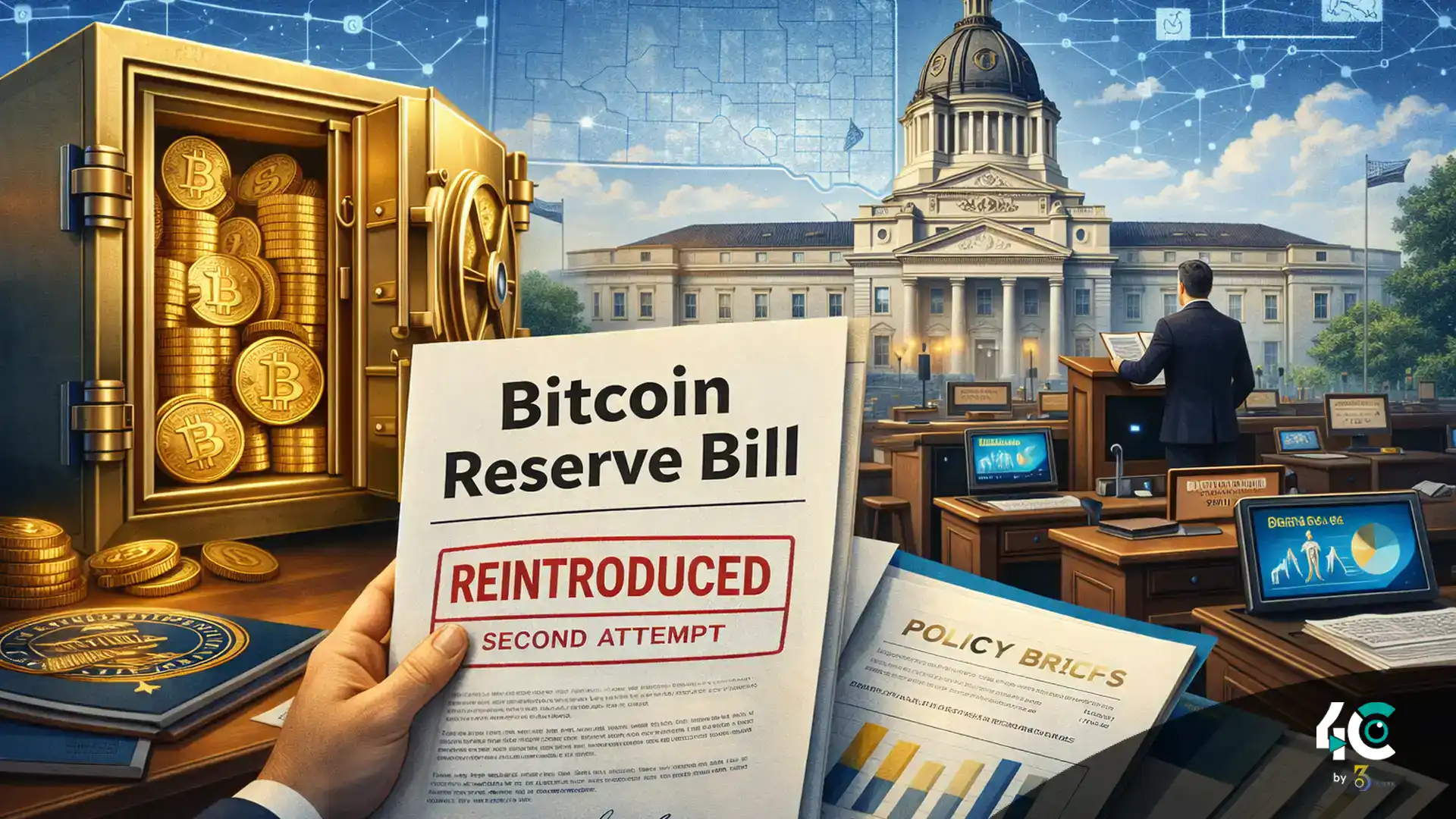
South Dakota State Representative Logan Manhart has introduced a bill that would permit the state to allocate a portion of public funds to Bitcoin. This follows the unsuccessful proposal from 2025—HB 1155, originally introduced by Manhart.
The proposed legislation would allow the South Dakota State Investment Council to invest up to 10% of specified public funds in Bitcoin, marking a major step toward recognizing BTC as a long-term reserve asset.
“Powerful currency. Strong state,” Manhart wrote in a post announcing the bill.
The Proposal Behind the South Dakota Bitcoin Reserve Bill
The new legislation slightly amends state code but preserves its primary goal: to legally allow South Dakota to hold Bitcoin as part of its investment strategy.
If passed, South Dakota would join a growing number of U.S. states exploring or adopting frameworks for Bitcoin reserves within state budgets.
Also Read : CFTC Launches Innovation Council to Shape Crypto and AI Regulation
Few US States Hold Bitcoin Reserves
Currently, only a select group of states—including Texas, Arizona, and New Hampshire—permit government agencies to invest in Bitcoin or hold crypto assets seized by law enforcement.
Nevertheless, nationwide interest is growing. Legislators in multiple states have introduced similar proposals, considering factors such as inflation and the future of state finances.
Who Is Responsible for the Bill?
Logan Manhart, a Republican elected in January 2025 to South Dakota’s 1st District, has been a leading advocate for Bitcoin-friendly legislation.
The renewed effort appears to benefit from more favorable political conditions, increasing the likelihood of advancing a South Dakota Bitcoin reserve bill.
A Bitcoin Reserve by the US Government Still Faces Legal Challenges
South Dakota’s initiative could influence federal Bitcoin reserve policy.
In March 2025, US President Donald Trump signed an executive order establishing a Strategic Bitcoin Reserve and a Digital Asset Stockpile. However, executive orders are not permanent like congressional legislation.
Patrick Witt, head of the White House Crypto Council, stated that unresolved legal issues are delaying the federal plan. While the government may retain Bitcoin from asset forfeiture, it currently lacks authority to purchase BTC. Treasury Secretary Scott Bessent suggested that budget-neutral paths could allow the US government to acquire Bitcoin in the future.
The Importance of the South Dakota Bitcoin Reserve Bill
The renewed South Dakota Bitcoin reserve bill comes as several US states explore Bitcoin as a strategic asset while federal policy remains uncertain.
If approved, the bill would send a clear signal that Bitcoin is more than a speculative asset—it could become a critical component of public finance.