










SEC Issues Landmark Guidance on Tokenized Securities
The SEC has finally provided clarity on tokenized securities, enabling smoother integration of security tokens into blockchain-based capital markets.
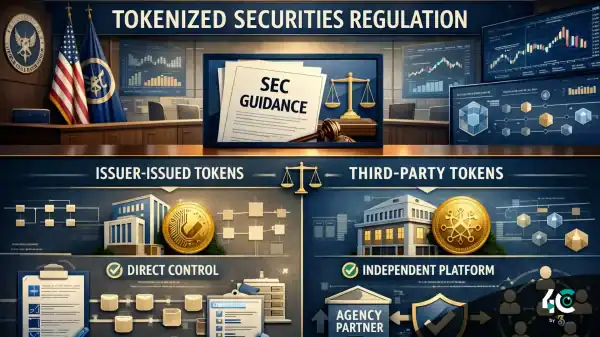
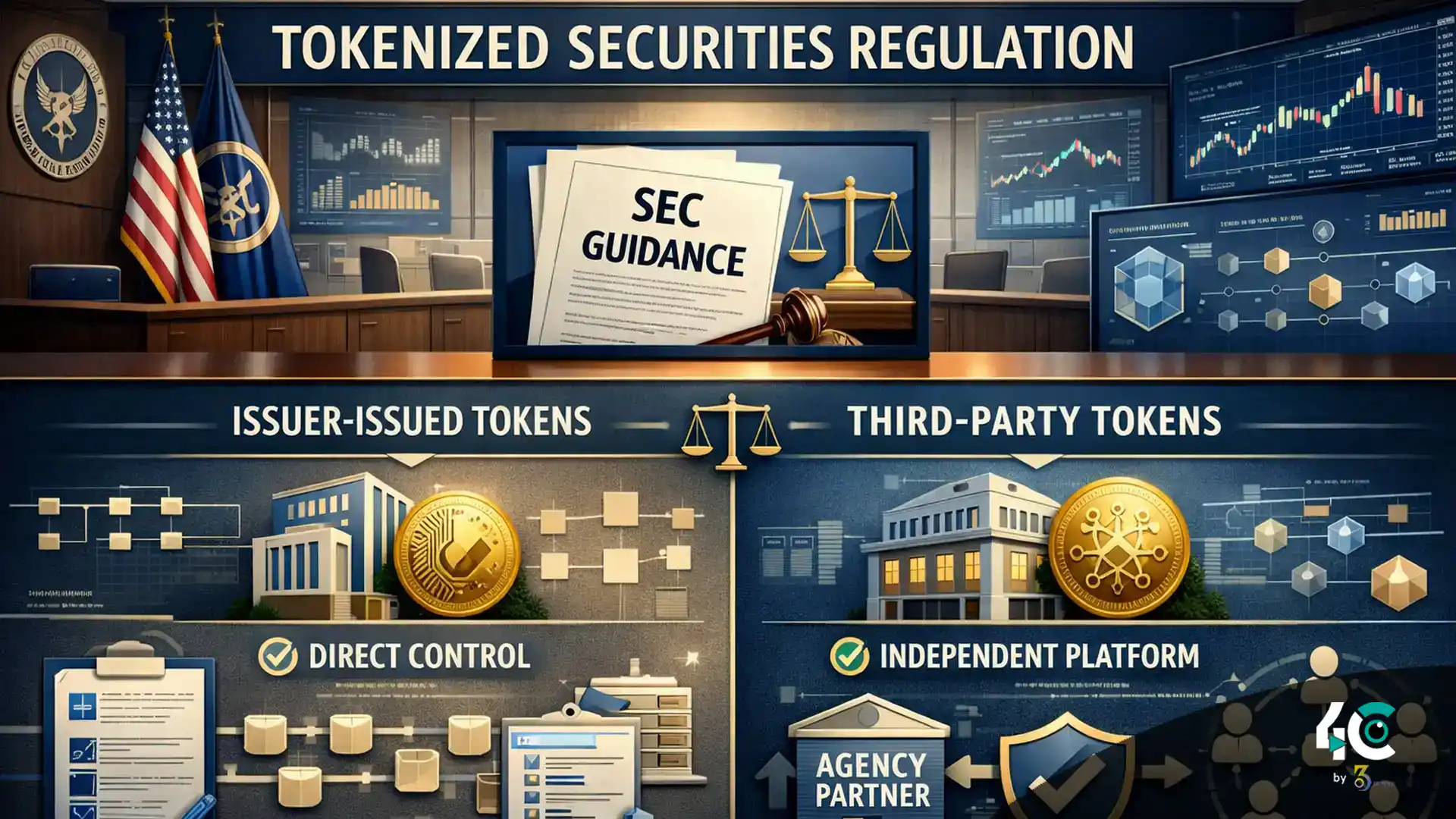
On Wednesday, the regulator categorized tokenized securities into two primary models, aiming to assist issuers, platforms, and investors in understanding how traditional securities regulations apply in an onchain environment.
As the SEC emphasized, tokenization does not change the legal nature of a security.
Overview of Tokenized Securities According to the SEC
The SEC outlined two main frameworks for tokenized securities:
1. Issuer-Backed Tokenized Securities
This model applies when the original issuer tokenizes the security itself. The SEC noted two common approaches:
- Onchain-native records: The blockchain becomes the official record of ownership.
- Hybrid models: Tokens are issued while maintaining updates to legacy offchain ownership systems.
Regardless of the method, registration, disclosure, and compliance obligations under federal securities law remain unchanged.
Also Read : Bitwise Launches Spot Bitcoin-Gold ETF Amid Currency Devaluation Fears
2. Custodial and Synthetic Models
Custodial Tokenization
Tokens are issued by a third-party custodian to represent indirect ownership of securities. Investors may hold the tokens, but the underlying assets remain in custody.
Artificial/Synthetic Tokenization
These tokens provide financial exposure to securities without granting actual ownership. Examples include:
- Organized notes
- Exchangeable securities
- Swaps based on securities
Here, investors gain economic rights linked to the underlying assets without holding them directly.
SEC Sends a Clear Message: Blockchain is Infrastructure, Not a Loophole
The SEC stressed that blockchain is a record-keeping technology, not a workaround to avoid compliance. Securities laws fully apply, whether a security is traditional or tokenized. Tokenization may enhance financial infrastructure, but it does not alter legal obligations.
Third-Party Risks Highlighted
The SEC cautioned that third-party tokenized securities carry additional risks:
- Potential issuer defaults
- Investor exposure to bankruptcy
- Necessity of broker-led custody over crypto-native self-custody
Positive Industry Response
Securitize, a leading tokenization platform, praised the SEC for recognizing issuer-backed tokenization as a legitimate innovation in financial markets.
“Precise frameworks like this are necessary for responsible tokenization scaling.”
The tokenization of onchain real-world assets (RWAs) has grown 92% YoY, underscoring the importance of regulatory clarity.
SEC Indicates a Careful but Ready Path Ahead
Previous SEC actions, such as permitting the DTCC to place stocks, bonds, and US Treasuries onchain, demonstrated early experiments with tokenized securities while preserving market safeguards.
In conclusion:
- Tokenized securities are not prohibited, but must comply with existing rules
- The SEC framework is expected to merge traditional finance with blockchain in the US capital markets
This guidance signals a measured path forward for blockchain-based financial instruments while maintaining investor protections.