
























Federal Reserve Crypto Guidance Officially Withdrawn
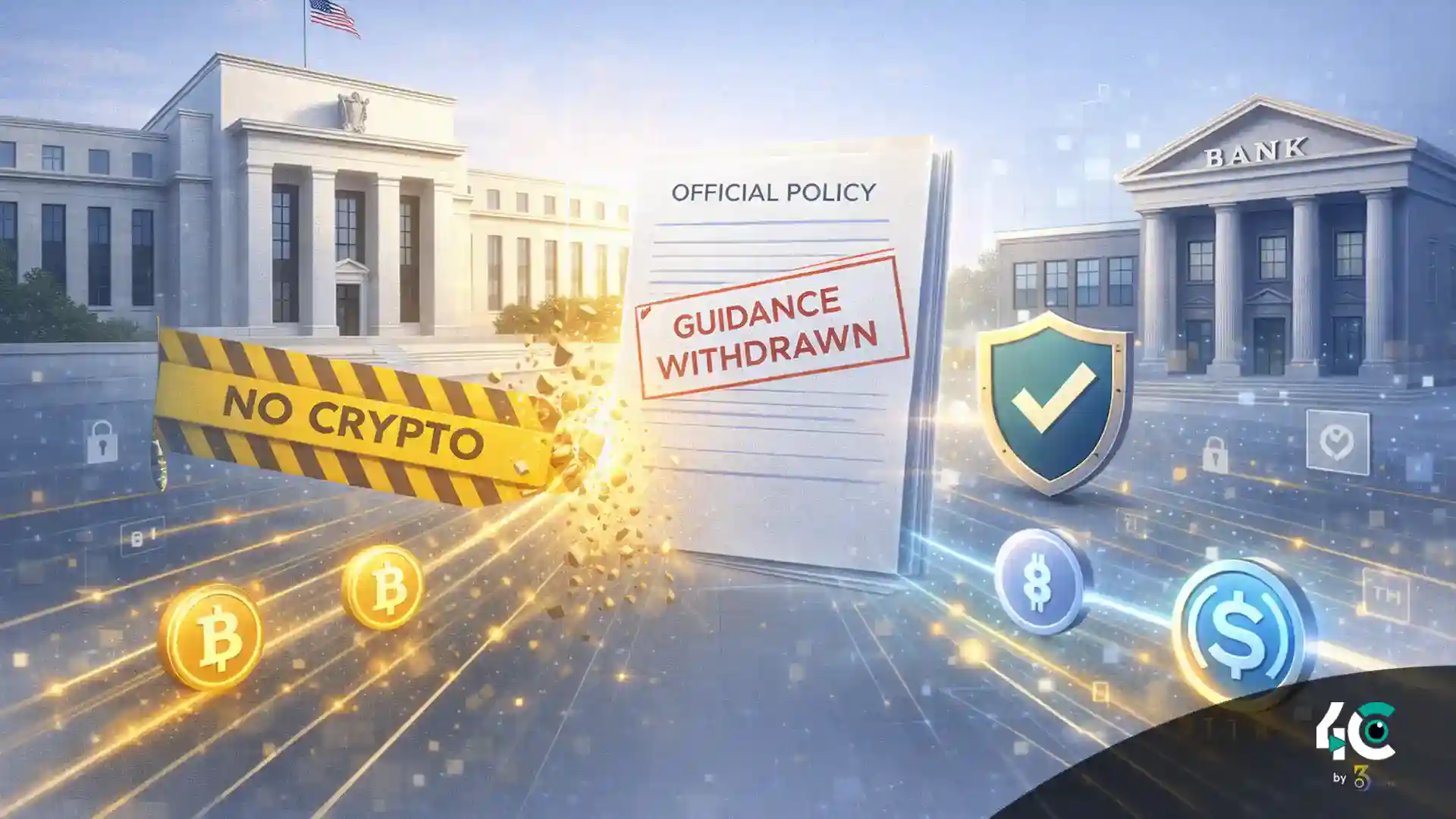
The Federal Reserve has taken a major step toward easing long-standing barriers between banks and digital assets by rescinding its 2023 guidance that restricted how Fed-supervised banks could engage with crypto-related activities.
The now-withdrawn policy forced uninsured banks to comply with the same rules as federally insured institutions under a one-size-fits-all risk framework. In practice, many state-chartered banks were automatically excluded from offering crypto services — and in some cases, even barred from Federal Reserve membership — simply because digital assets were not permitted for national banks at the time.
With the rollback, the Fed signals that its view of crypto — and the financial system itself — has evolved.
Why the Fed Reversed Course on Crypto Rules
According to the Federal Reserve, the 2023 framework no longer reflects today’s reality.
In its statement, the central bank acknowledged that both the financial system and regulators’ understanding of innovative financial products have materially changed over the past two years.
“The 2023 policy statement is no longer appropriate and has been withdrawn,” the Fed said, pointing to deeper institutional knowledge of emerging technologies, including crypto and blockchain-based services.
The decision underscores a broader regulatory pivot away from blanket restrictions and toward risk-based oversight.
Also Read : South Korea Set to Enforce Bank-Level Crypto Liability Rules
Custodia Bank CEO Calls Decision a Long-Overdue Fix
The move was welcomed by Caitlin Long, CEO of Custodia Bank, who said the rescinded Federal Reserve crypto guidance was central to why her bank had previously been denied a Fed master account.
A master account allows banks to hold funds directly with the Federal Reserve and access core payment rails — a critical capability for operating independently within the US financial system.
Long criticized the Fed for citing the guidance before it was formally enacted, calling the earlier decision unlawful.
“The Fed broke the law by relying on this guidance before it officially existed,” she said, adding that many of the officials involved are no longer in positions of influence.
“Nature is healing,” Long wrote, praising Fed Governors Michelle Bowman and Christopher Waller for backing the shift.
New Federal Reserve Crypto Guidance Focuses on Innovation
Alongside the withdrawal, the Federal Reserve released new guidance establishing a formal pathway for both insured and uninsured state member banks to pursue innovative activities, including crypto — as long as strong risk management standards are met.
Fed Vice Chair for Supervision Michelle Bowman said the updated framework is designed to balance innovation with stability.
“By creating a pathway for responsible innovation, we’re ensuring the banking system remains safe and sound — while also modern, efficient, and competitive,” Bowman said.
This marks a clear departure from past policies that critics argued stifled progress and pushed crypto innovation offshore.
Not Everyone at the Fed Agreed
The decision was not unanimous. Fed Governor Michael Barr dissented, warning that removing the 2023 guidance could encourage regulatory arbitrage and weaken financial safeguards.
Barr argued that equal treatment across banks remains essential to maintaining fairness and stability within the system.
“This change risks undermining a level playing field and incentivizing behavior that conflicts with financial stability,” he said.
Barr has previously faced criticism over alleged ties to efforts aimed at limiting banking access for crypto firms. At the same time, he has publicly supported structured, responsible regulation — particularly around stablecoins — highlighting the complex internal debate still shaping US crypto policy.
What This Means for US Crypto and Banking
The withdrawal of restrictive Federal Reserve crypto guidance marks a pivotal moment for US financial institutions. For the first time in years, banks now have clearer, more realistic rules for engaging with digital assets — without being automatically penalized for innovation.
While risks remain, the message from the Fed is unmistakable: crypto is no longer treated as an outlier, but as a legitimate part of the modern financial system.
For US banking and crypto alike, the door is no longer shut — it’s finally open.