























The Week Blockchain Became Fully Institutional
The cryptocurrency sector has crossed another invisible threshold and there is no going back.
In the last week, use-case performance has proved blockchain to be a financial infrastructure backbone. In many cases, there were moves by banks, regulators, and lawmakers to try and control and regulate cryptocurrency rather than just words.
The crypto world has been stirring the financial order in a quiet manner.
Saudi Arabia Indicates a Shift Towards Blockchain
The Middle East featured one of the strongest signals.
Through its innovation arm, Riyad Bank Jeel, Ripple announced a blockchain partnership with one of Saudi Arabia’s largest and most influential financial institutions. This collaboration is more than an experiment. The two entities are investigating:
This alliance aligns with Saudi Vision 2030, aiming to reduce oil reliance and transform the Kingdom into a technology-enabled economy.
Riyad Bank, with assets over $130 billion, is signing up for a blockchain project, showing that blockchain is now strategic, not peripheral.
This signal has been bolstered by Ripple’s expanded regional footprint. According to XRP News, more than $1 billion worth of tokens are on the XRP Ledger. Examples of public blockchain impact now occur in regulated markets.
Read Full Article: Ripple–Riyad Bank Blockchain Collaboration Marks a Major Step for Saudi Arabia
The SEC Clearly Defines the Contours of Tokenized Securities
As Saudi Arabia moves toward adoption, U.S. regulators are defining the framework.
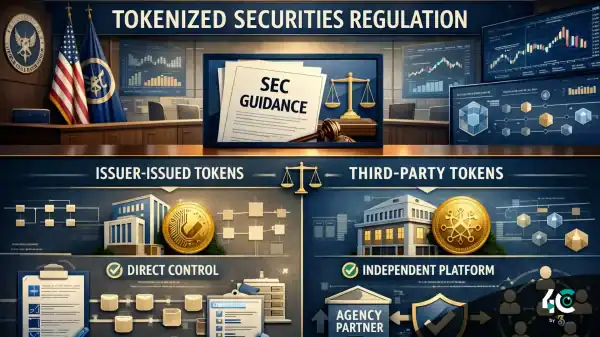
The U.S. Securities and Exchange Commission recently released guidance on tokenized securities, clarifying that tokenization does not change the legal nature of a security.
Two models are highlighted by the SEC:
- Issuer-backed tokenized securities – companies directly tokenize their own assets.
- Custodial or synthetic models – third-party issuance of tokens representing exposure rather than ownership.
The SEC emphasizes that blockchain is infrastructure, not a loophole. Registration, disclosure, and investor protections remain mandatory.
Securitize noted that the guidance is essential for responsible growth, with real-world asset tokenization growing 92% year-on-year. Tokenization is permitted as long as it complies with traditional finance rules.
Read Full Article: SEC Draws the Line on Tokenized Securities – Much Needed Clarity
Washington Presents a Bill for Crypto Market Structure
Meanwhile, U.S. lawmakers pressed crypto regulation into its next phase.
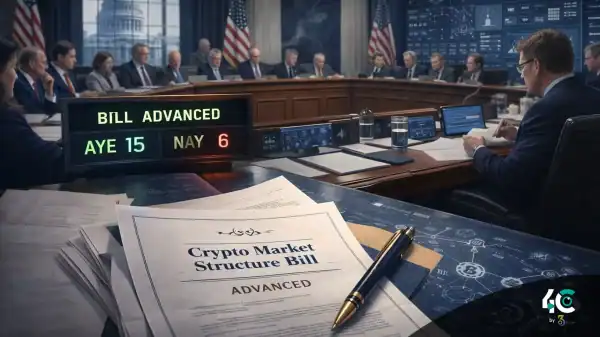
The Senate Agriculture Committee voted 12–11 to advance a crypto market structure bill toward a full Senate vote. The legislation seeks to:
- Establish regulatory authority
- Grant the CFTC oversight of digital commodity spot markets
- Create clearer rules for crypto intermediaries
- Implement consumer protections
Political Debate Around the Bill
Senator Cory Booker warned against criminalizing developers, while Democrats pushed for ethics provisions. Amendments aimed at banning lawmaker conflicts of interest and crypto bailouts were rejected along party lines.
Despite divisions, industry groups sense momentum. Proponents urge that U.S. crypto policy may finally leave enforcement-first uncertainty behind, moving toward a workable framework.
Read Full Article: US Senate Moves Forward With Crypto Market Structure Bill
This Week Is a Game-Changer
These developments collectively tell a larger story:
- Saudi Arabia’s banks embedding blockchain into core systems
- SEC legalizing tokenization with guardrails
- U.S. Congress members approaching cryptocurrency regulation
- Billion-dollar financial assets hosted on public blockchains
Crypto is no longer asking for permission. It is becoming integrated into the global financial system, influencing how money moves, how assets are issued, and how markets are managed.
The apprehension of being left out has now become a strategic organizational priority.
This week advanced crypto efforts more than ever, securing its place in the future of finance.