
























Crypto Chronicle: Power, Policy, and Profits — The Week Crypto Crossed the Point of No Return
If there was ever a week proving crypto has entered its “grown-up” era, this was it.
From Beijing to Washington, from Wall Street boardrooms to global tax authorities, the digital asset ecosystem is being reshaped in real time. Governments are asserting control, institutions are expanding exposure, and the rules of engagement for crypto users are about to change — permanently.
China Flips the CBDC Playbook With Interest-Bearing Digital Yuan
China sent shockwaves through global finance by announcing that its digital yuan (e-CNY) will begin paying interest from January 1, 2026.
Until now, the e-CNY functioned like digital cash — useful for payments, but inert as a store of value. That changes once interest enters the equation. According to the People’s Bank of China (PBOC), commercial banks will integrate e-CNY balances directly into their asset-liability systems, effectively turning the digital yuan into a deposit-like instrument.
In simple terms: China is blurring the line between bank money and central bank money.
This move strengthens adoption incentives, enhances cross-border settlement, and positions the digital yuan as a core pillar of China’s future monetary policy. It also sharpens the ideological divide with the United States, which has rejected a US CBDC while pushing private stablecoins instead.
OECD CARF: The End of “Out of Sight, Out of Mind” Crypto Taxes
While China was redesigning digital money, global tax authorities were closing the net.
From January 2026, the OECD Crypto-Asset Reporting Framework (CARF) will go live across 48 jurisdictions, including the United Kingdom and European Union.
CARF doesn’t create new taxes — it weaponizes enforcement. Exchanges must collect verified tax residency data, track balances and transactions, and submit standardized reports to domestic authorities, which will then be shared internationally. Offshore accounts, fragmented DeFi activity, and “small” undeclared disposals will no longer slip through the cracks.
For exchanges, CARF is a structural overhaul touching onboarding, compliance systems, governance, and reporting infrastructure. For users, it’s a wake-up call: if crypto activity doesn’t match tax filings, discrepancies will surface fast.
The gray zone is closing. Crypto is officially entering the age of automated global transparency.
Bitwise Goes All-In on Altcoins With 11 New ETF Filings
As regulators tighten the screws, Wall Street is doing the opposite — expanding exposure.
Bitwise made one of the boldest institutional moves of the year by filing for 11 single-token crypto strategy ETFs, targeting assets like Aave, Uniswap, Zcash, Bittensor, Near, Sui, and more.
Unlike broad index products, these ETFs offer precision exposure to individual blockchain ecosystems, using a hybrid structure that blends direct token holdings with regulated exchange-traded products (ETPs) and derivatives.
The message is clear: altcoins are no longer treated as speculative side bets — they’re being packaged as investable financial products for mainstream portfolios.
With rivals like Grayscale and VanEck also circling altcoin ETFs, Bitwise’s coordinated multi-fund push signals growing institutional confidence that demand for regulated altcoin exposure is real — and accelerating.
January Showdown: US Senate Prepares to Decide Crypto’s Regulatory Fate
All roads now lead to January.
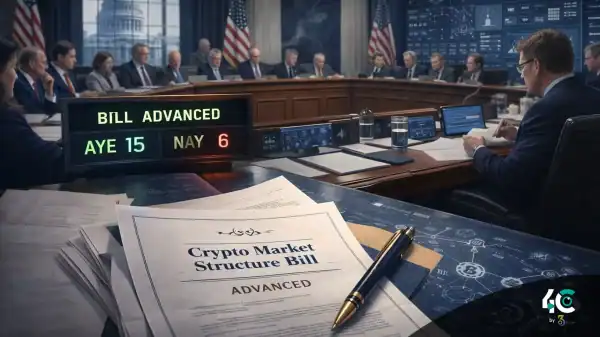
After months of delays, the US Senate is preparing to formally consider long-stalled digital asset market structure legislation — potentially the most consequential crypto law in American history.
At stake is regulatory clarity: defining how the SEC and CFTC divide oversight, reducing enforcement-by-lawsuit, and giving crypto businesses a predictable framework to operate within.
Momentum is building, but risks are real. Election season politics, thin bipartisan support, and the exit of Senator Cynthia Lummis — a strong crypto ally — have turned January into a now-or-never moment.
If the bill advances, it could unlock institutional confidence and long-term innovation in US crypto markets. If it stalls again, regulatory fog may persist — even as other countries race ahead.
The Bigger Picture: Crypto Grows Up — Fast
This week made one thing clear: crypto is no longer fighting for relevance. It’s fighting over structure, control, and scale:
- China is embedding digital currency into monetary policy
- Governments are automating global tax visibility
- Wall Street is deepening its altcoin exposure
- Washington is under pressure to deliver real rules
The era of experimentation is ending. The era of integration has begun.
For investors, builders, and institutions alike, the real FOMO now isn’t about missing the next token — it’s about missing the moment when crypto became permanent.