

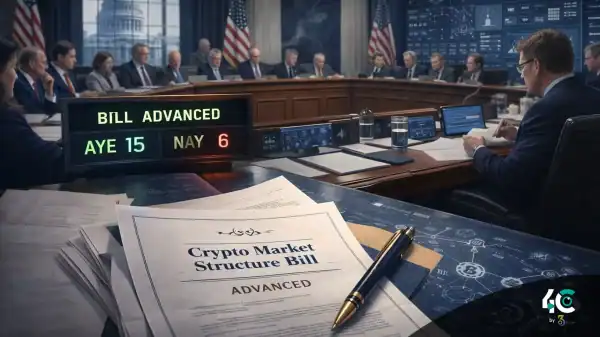
























CLARITY Act Slowdown May Not Be Bad News for Crypto
The sudden slowdown of the CLARITY Act crypto market structure bill in the US Congress may look like a setback on the surface—but according to respected market analyst Michaël van de Poppe, it could be one of the best outcomes the crypto industry could have hoped for.
Van de Poppe argues that the bill, in its current form, carried serious risks for decentralized finance (DeFi), tokenized assets, and stablecoins. Its stalling, he says, creates a crucial opportunity to fix deep structural flaws before irreversible damage is done.
Why the CLARITY Act Stalling May Help the Crypto Industry
The debate intensified after Coinbase withdrew its support for the CLARITY Act, with CEO Brian Armstrong publicly outlining major concerns about the legislation’s latest draft.
According to Armstrong, the bill introduced provisions that could fundamentally undermine onchain finance, including:
- A de facto ban on tokenized equities
- Broad government access to user data on DeFi platforms
- Restrictions that would effectively eliminate yield-bearing stablecoins
Van de Poppe echoed these concerns, warning that passing the bill unchanged would have sent shockwaves through crypto markets.
“If this version had passed, it would have had a very negative impact on the broader market,” van de Poppe said, adding that the pause allows lawmakers and industry leaders to realign and reopen meaningful dialogue.
Also Read : Bank of America Opens the Door to Bitcoin ETFs, Bringing Crypto Into Mainstream Wealth Portfolios
CLARITY Act vs MiCA: A Familiar Regulatory Pattern
Van de Poppe compared the current CLARITY Act impasse to the early stages of Europe’s Markets in Crypto-Assets (MiCA) regulation.
MiCA—now widely regarded as a landmark framework for the European Union—went through multiple rewrites and intense negotiations before reaching a balanced final version. Early drafts were heavily criticized for being overly restrictive, much like the CLARITY Act today.
“The parallels are striking,” van de Poppe noted. “MiCA wasn’t right on the first try either, but the process ultimately delivered clarity without crushing innovation.”
Why Crypto Market Structure Legislation Still Matters
Despite the controversy, passing a clear crypto market structure framework remains a top priority for the industry and its allies in Congress. Clear rules are widely viewed as essential for:
- Institutional adoption
- Long-term capital formation
- Legal certainty for onchain finance
The disagreement is not about whether regulation is needed—but how it should be designed.
White House, Coinbase, and Ongoing CLARITY Act Negotiations
Reports surfaced suggesting the White House might withdraw support for the CLARITY Act following Coinbase’s decision. However, Brian Armstrong swiftly pushed back, calling the claims inaccurate.
According to Armstrong, negotiations are still active, and discussions with policymakers—including the White House—have been “super constructive.”
His comments sparked intense reactions across the crypto community, particularly around the proposed ban on stablecoin yield.
Nic Carter, a prominent venture capitalist, issued a stark warning:
“Don’t let them kill stablecoin yield. That would set back stables for a generation. Hold the line.”
The Bigger Picture for CLARITY Act Crypto Regulation
For now, the stalling of the CLARITY Act crypto market structure bill appears less like a failure and more like a necessary reset.
Industry leaders believe this pause increases the odds of a smarter, more balanced framework—one that protects consumers without suffocating innovation. If history is any guide, taking more time could ultimately lead to stronger legislation and a healthier future for US crypto markets.
Sometimes, in regulation as in markets, not moving too fast is the real progress.