
















Canton Coin Rallies on Institutional Tokenization Momentum
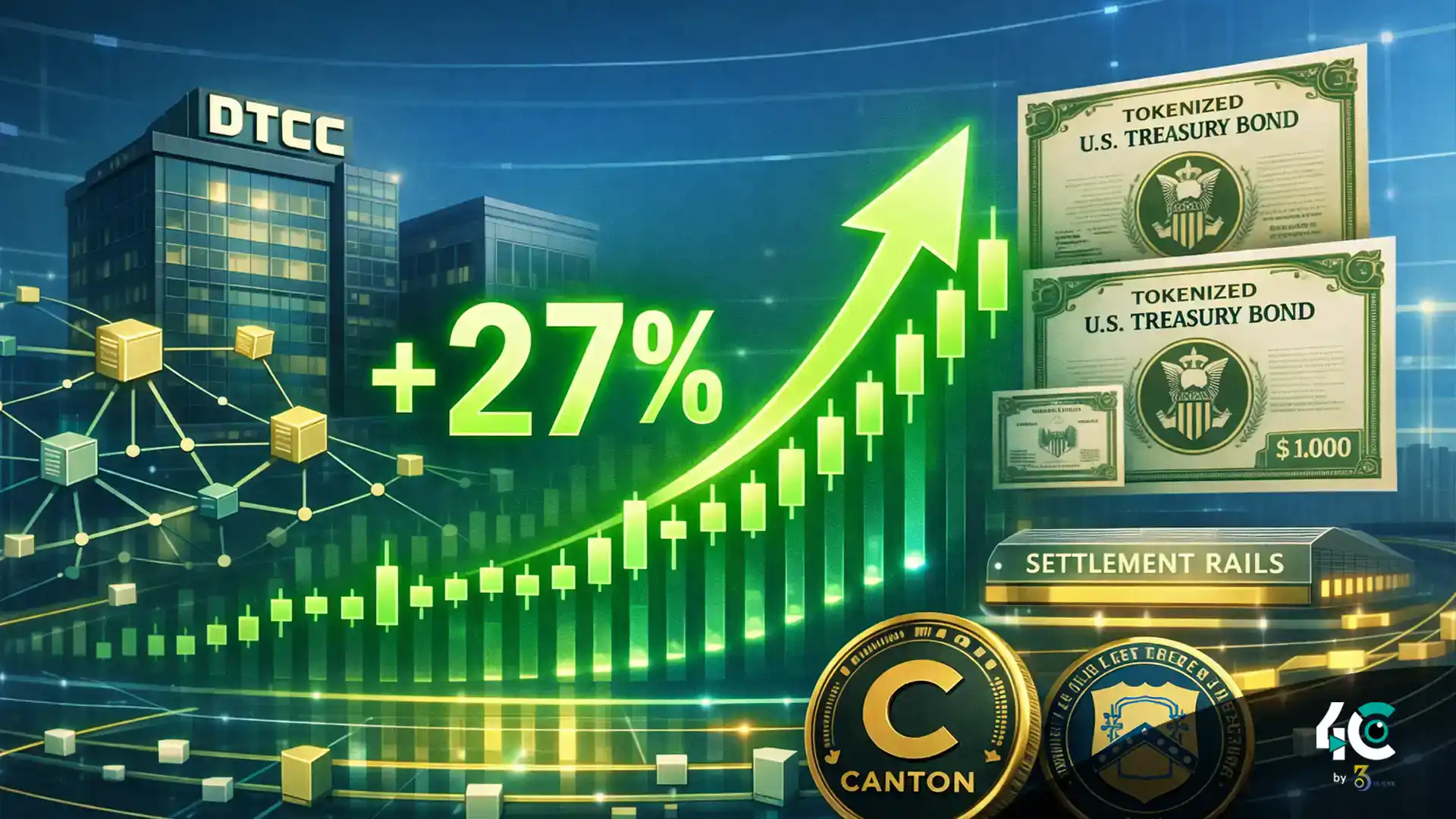
Canton Coin has emerged as one of the strongest performers in the crypto market this week, climbing roughly 27% in seven days and sharply outperforming major digital assets. The rally reflects growing excitement around institutional adoption of tokenized real-world assets, particularly US Treasurys.
The price surge followed a Dec. 17 announcement from the DTCC, which unveiled plans to tokenize a portion of US Treasury securities held at its Depository Trust Company (DTC) subsidiary using the Canton Network.
For context, DTCC is a cornerstone of global finance. Its subsidiaries processed an estimated $3.7 quadrillion in securities transactions last year, giving the move major credibility and signaling that tokenization is moving from experimentation to execution.
DTCC’s Treasury Tokenization Plan Lifts Canton Coin
Why the Canton Network Matters
DTCC CEO Frank La Salla described the initiative as a roadmap for bringing “real-world, high-value tokenization use cases to market,” starting with US Treasurys and eventually expanding to a wide range of DTC-eligible assets.
The Canton Network is designed specifically for regulated financial institutions. It blends permissioned and permissionless blockchain features, allowing firms to issue, manage, and settle tokenized assets while staying compliant with regulatory requirements.
Canton Coin, the network’s native token, powers transactions and supports core network operations — making it a direct beneficiary of rising institutional usage.
Also Read : Bhutan Initiates Partnership to Enhance Crypto Infrastructure
Canton Coin Outperforms a Flat Crypto Market
The strength of Canton Coin is even more striking when compared to the broader market:
- Bitcoin (BTC) and Ether (ETH) both slipped around 0.5%
- BNB fell roughly 0.9%
- Solana (SOL) declined about 3.3%
While major assets stalled, Canton Coin surged — a clear signal that investors are rotating toward infrastructure plays tied to real-world asset tokenization, rather than purely speculative narratives.
Tokenized Real-World Assets Take Center Stage in 2025
RWA Tokenization Accelerates Rapidly
The rise of Canton Coin mirrors explosive growth across the real-world asset (RWA) tokenization sector. According to data from RWA.xyz:
- Total tokenized RWA value has more than tripled year-over-year
- Market size grew from $5.6 billion at the end of 2024 to roughly $19 billion today
- US Treasury products are driving much of this expansion
US Treasurys Lead the Tokenization Wave
Tokenized US Treasurys now represent around $9 billion in onchain value, up from approximately $3.9 billion at the start of the year.
The largest product in this category is BlackRock’s USD Institutional Digital Liquidity Fund (BUIDL), which offers onchain exposure to short-term US Treasurys with daily yield accrual. The fund has grown to nearly $1.7 billion in assets.
Other major players include:
- Ondo Finance – roughly $830 million in assets
- Franklin Templeton – approximately $798 million in assets
Together, these products underscore how traditional finance giants are embracing blockchain rails.
Why Institutions Are Tokenizing Real-World Assets
Tokenization offers clear advantages that legacy systems struggle to match:
- Global access to traditionally restricted assets
- Lower transaction costs
- Near-instant settlement
- 24/7 trading availability
According to Keith Grossman, president of crypto payments firm MoonPay, putting traditional assets onchain will force financial institutions to evolve — much like how digital technology transformed the media industry.
Why Canton Coin Is on Institutional Radars
As tokenization shifts from theory to large-scale deployment, Canton Coin sits at the intersection of blockchain and traditional finance. Backed by infrastructure designed for regulated institutions and now tied to DTCC’s Treasury tokenization plans, the network is gaining serious credibility.
If real-world asset tokenization continues its rapid expansion, Canton Coin’s recent rally may be less of a short-term spike and more of a signal that institutional crypto adoption is entering a new phase.