

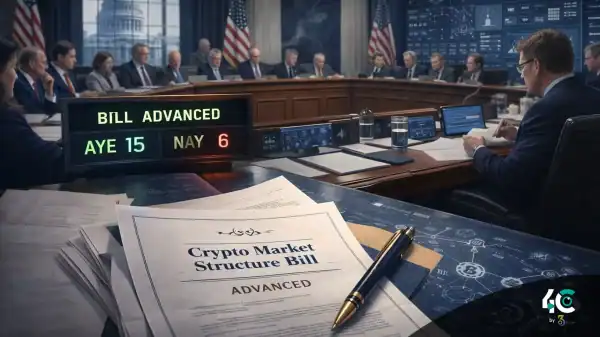
























The American House Financial Services Committee clears the stablecoin regulation bill. The House Financial Services Committee has approved the Stablecoin Transparency and Accountability for a Better Ledger Economy Act (STABLE). The US House Financial Services Committee passed the bill—the Stablecoin Transparency and Accountability for a Better Ledger Economy (STABLE) Act—with 32-17 votes to regulate crypto assets in America.
‘The STABLE Act aims to impose stricter measures on stablecoins, which are digital currencies backed by national fiat currencies like the USD. The legislation will require that issuers keep reserves to back the stablecoin, as well as the implementation of transparency and anti-money laundering measures.
Despite its design to safeguard consumers and maintain financial stability, the bill has encountered political challenges during its passage.
Certain lawmakers raised issues on the Trump family’s connection with the stablecoin space. Trump’s company, World Liberty Financial, recently put out a stablecoin named USD1, which has raised some questions.
During the committee talk, Democrats tried to change it so government officials like the president couldn’t work in the stablecoin business while in office. But the change did not work.
Debate in Congress is also the GENIUS Act — another stablecoin regulation bill. Both bills may aim for similar goals, but there are key differences in their approaches to stablecoin market oversight, particularly regarding foreign issuers and regulation. Now, lawmakers are exploring how to align the two bills to simplify the regulatory process.
The STABLE Act is progressing, yet it must endure heightened scrutiny and political maneuvers to secure its passage. The future of legislation is uncertain due to the growing debate over stablecoins, regulations, and politics.